Throughout the selections we read fro class today, Butler stresses the inseparability (and simultaneously the disconnection) between gendered identities and gendered bodies. Sex is always already gendered and cannot be seen as a prediscursive ground onto which gender is written. I am interested in her disavowal of phenomenology (Gender Trouble, 43) in terms of her project. She is careful to validate “being a gender” as not “illusory” or “artificial,” yet her analysis is not concerned “being” as much as “doing.” How can we use her insights to understand the feeling of being gendered? Where (or when) can I place my sense/feeling of being in a gendered body?
In Bodies that Matter, Butler introduces Spivak’s concept of “enabling violation” to help wrestle with the contradictory experience of using terms which are implicated in a system of power to subvert that same system. Does this concept excuse the parade of feminists in the first chapter of Gender Trouble who uncritically took up totalizing concepts “woman” and “sex” in order to defend an experience of oppression? How does one weigh what enables and what violates? Thinking pedagogically, how does one teach gender and sex without resorting to these violations of the past?
Butler’s treatment of Venus Xtravaganza’s death seems odd. After Butler’s discussion of the ability for drag performance to reify and subvert systems of power simultaneously, she seems to put aside the subversive aspect and construct Venus’s life/performance as a naïve mime of class and gender positions that are out of her reach. Lines like “her death thus testifies to a tragic misreading of the social map of power” and “a promise which, taken too seriously, can culminate only in disappointment and disidentification” (131) make me wonder if Butler is blaming Venus for her own murder. Is she? What crime did Venus commit to deserve such punishment? Is there another way to read this passage? How does the slippage between drag and transgender identity (both theoretically and in lived experience) contribute to Butler’s (tragic) misreading of Venus?
Thursday, March 5, 2009

All the World's a Stage (or why my head is burning from Butler)
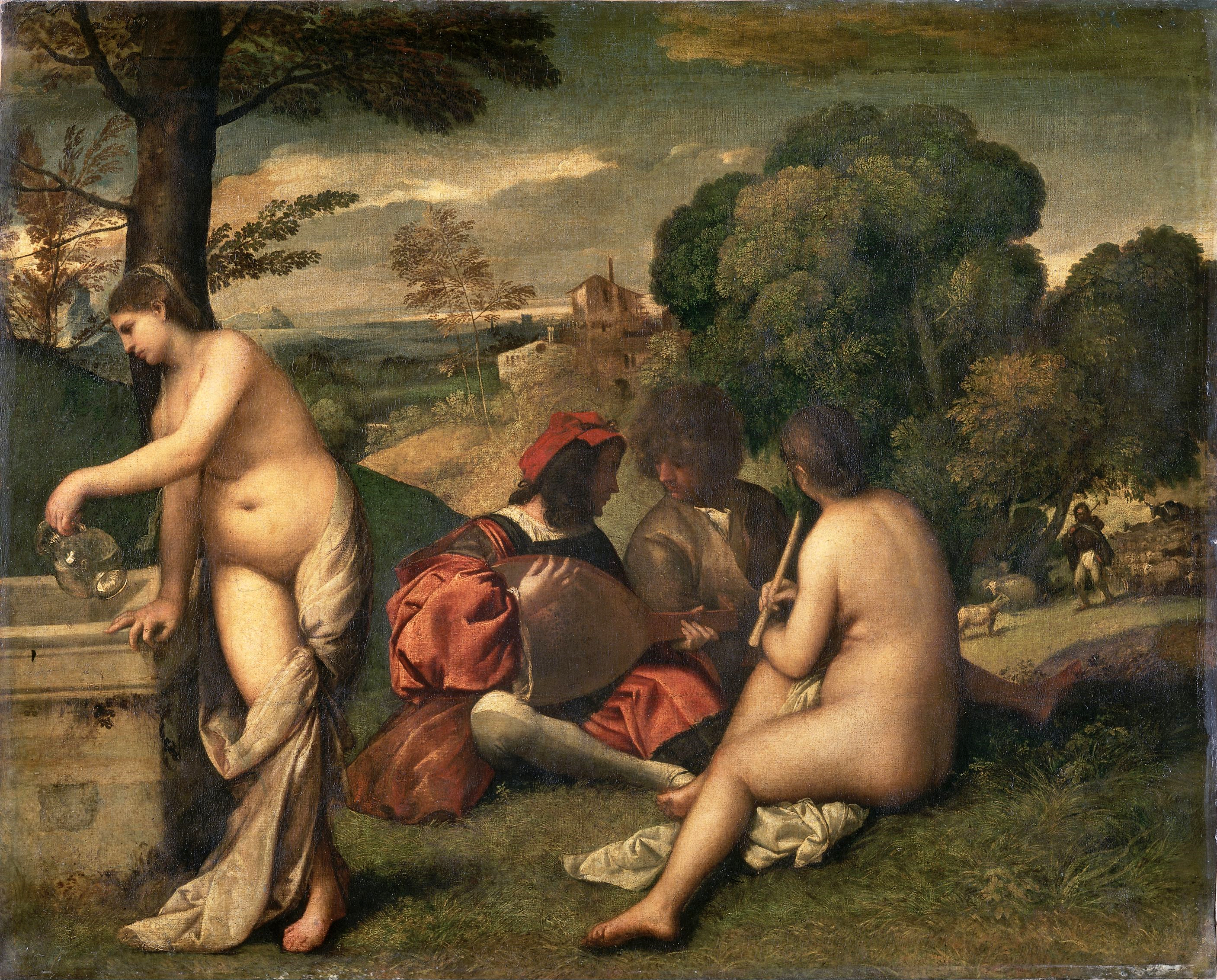
Bartky writes that at least in 1988, “the current body of fashion is taut, small-breasted, narrow-hipped, and of a slimness bordering on emaciation” (64). This is a stark contrast from what I understand to be the more full-bodied look glamorized in the 1950s and 1960s with sex icons like Marilyn Monroe and Elizabeth Tailor and an incredible departure from classic conceptions of beauty depicted in paintings as evidenced here. What cultural and historical factors shift conceptions of beauty, and how has the feminine ideal changed throughout history (in the West), and for what purpose? In addition, why is, as Bartky argues, “femininity a ‘set up’ [which] requires such radical and extensive measures of bodily transformation that virtually every woman who gives herself to it is destined in some degree to fail?” (71). In other words, what function does creating an impossible ideal serve, knowing in fact that both genders have such an unattainable ideal that they are encouraged to pursue? Is there a connection then between ideal femininity/masculinity and the divine? If so, in what ways do our insatiable imaginations and desires for perfection and categories or perfect categories help in the construction and performance of gender?
Butler writes in “Subjects of Sex/Gender/Desire,” that “the juridical structures of language and politics constitute the contemporary field of power” (8). Also, she borrows from Lacan who seems to argue that language itself, or the symbolic, which constitutes autonomy and adulthood, is a communication dominated by the Phallus, a male-dominated set of symbols and signs. How do we (everybody, but perhaps specifically feminist and/or LGBT activists, etc.) escape the prison of language then, assuming that the language is at best a co-opted one we have to constantly struggle to evolve and shift, and at worst, a constraining method of binary thoughts and delimiting categories that hinder our ability to discuss these issues? In other words, how do we co-opt a language that is arguably constructed to regulate modes of thought regarding sex, gender, sexuality, etc. without running the risk of being co-opted by it? For instance, Butler writes, “for Irigaray, the possibility of another language or signifying economy is the only chance at escaping the ‘mark’ of gender which, for the feminine, is nothing but the phallogocentric erasure of the female sex” (35).
In Subversive Bodily Acts, Butler writes, “that the gendered body is performative suggests that it has no ontological status apart from the various acts which constitute its reality” (173). Moreover, she argues, “that various acts of gender create the idea of gender, and without those acts, there would be no gender at all. Gender is, thus, a construction that regularly conceals its genesis; the tacit collective agreement to perform, produce, and sustain discrete and polar genders as cultural fictions” (178). So, can one escape gender, as it were, or rather, can one escape the performance, can one stop the “act,” or is the “act” all we have to work with, to “be?” What would a genderless world look like and can we even conceive of it with our available lexicon? Finally, since gender is only a “tacit collective agreement” and since it is so dependent on a continued performance, since it is, essentially, fluid or clay in our hands waiting to be shaped, aren’t we in the advantageous position to reshape the conceptions of gender as we see fit? Provided we are, is this only a futile victory considering it does not so much do away with the chains of gender as rattle them a little?
Continuing on this ominous, if not tenuous, platform of optimism, Butler argues in “Gender is Burning” that the drag queen performances in Paris is Burning are “not an appropriation of dominant culture in order to remain subordinated by its terms, but an appropriation that seeks to make over the terms of domination, a making over which is itself a kind of agency, a power in and as discourse, in and as performance, which repeats in order to remake – and sometimes succeeds” (137). Here Butler reiterates the agency and resistant power present in the act of performance, an act of being that simultaneously offers support and friction to hegemonic conceptions of gender. With such a powerful tool at hand, then, the tool of performance, can we assume that every performance has the same potential for subversion, or does the performer matter? Of course, if there is no gender without the performance, what is the performer without the performance? How do the men in Paris is Burning (sometimes) succeed, as Butler suggests, in remaking the “terms of domination” and what prevents that hideous modifier – sometimes ¬– from being always, or at the very least, regularly?
Butler writes in “Subjects of Sex/Gender/Desire,” that “the juridical structures of language and politics constitute the contemporary field of power” (8). Also, she borrows from Lacan who seems to argue that language itself, or the symbolic, which constitutes autonomy and adulthood, is a communication dominated by the Phallus, a male-dominated set of symbols and signs. How do we (everybody, but perhaps specifically feminist and/or LGBT activists, etc.) escape the prison of language then, assuming that the language is at best a co-opted one we have to constantly struggle to evolve and shift, and at worst, a constraining method of binary thoughts and delimiting categories that hinder our ability to discuss these issues? In other words, how do we co-opt a language that is arguably constructed to regulate modes of thought regarding sex, gender, sexuality, etc. without running the risk of being co-opted by it? For instance, Butler writes, “for Irigaray, the possibility of another language or signifying economy is the only chance at escaping the ‘mark’ of gender which, for the feminine, is nothing but the phallogocentric erasure of the female sex” (35).
In Subversive Bodily Acts, Butler writes, “that the gendered body is performative suggests that it has no ontological status apart from the various acts which constitute its reality” (173). Moreover, she argues, “that various acts of gender create the idea of gender, and without those acts, there would be no gender at all. Gender is, thus, a construction that regularly conceals its genesis; the tacit collective agreement to perform, produce, and sustain discrete and polar genders as cultural fictions” (178). So, can one escape gender, as it were, or rather, can one escape the performance, can one stop the “act,” or is the “act” all we have to work with, to “be?” What would a genderless world look like and can we even conceive of it with our available lexicon? Finally, since gender is only a “tacit collective agreement” and since it is so dependent on a continued performance, since it is, essentially, fluid or clay in our hands waiting to be shaped, aren’t we in the advantageous position to reshape the conceptions of gender as we see fit? Provided we are, is this only a futile victory considering it does not so much do away with the chains of gender as rattle them a little?
Continuing on this ominous, if not tenuous, platform of optimism, Butler argues in “Gender is Burning” that the drag queen performances in Paris is Burning are “not an appropriation of dominant culture in order to remain subordinated by its terms, but an appropriation that seeks to make over the terms of domination, a making over which is itself a kind of agency, a power in and as discourse, in and as performance, which repeats in order to remake – and sometimes succeeds” (137). Here Butler reiterates the agency and resistant power present in the act of performance, an act of being that simultaneously offers support and friction to hegemonic conceptions of gender. With such a powerful tool at hand, then, the tool of performance, can we assume that every performance has the same potential for subversion, or does the performer matter? Of course, if there is no gender without the performance, what is the performer without the performance? How do the men in Paris is Burning (sometimes) succeed, as Butler suggests, in remaking the “terms of domination” and what prevents that hideous modifier – sometimes ¬– from being always, or at the very least, regularly?
Friday, February 27, 2009
NY Times on the Snuggie
Snuggie Rode Silly Ads to Stardom Over Rivals
I kid you not.
Update: Leo's grandparents bought him a Snuggie last weekend, so there is now one ensconced in my home. It's the kid's, but he lets me use it.
I kid you not.
Update: Leo's grandparents bought him a Snuggie last weekend, so there is now one ensconced in my home. It's the kid's, but he lets me use it.
Thursday, February 26, 2009
Foucault and Ang/Hermes questions
1. With regards to the repressive hypothesis discussed on page 10, Foucault disagrees with the arguments because he sees society as being more tolerant than repressive, which is true with regards to French society. Can the same be said about American culture though? No. How then has American censorship changed from the 17th/18th century compared to today?
For one, the role the church plays has taken on a secondary or even tertiary position as we have become a society governed by the state rather than by the church. Despite the role religion has played recently in the discourse, it has not been forgotten as people still use the teachings of their religion as a way to keep others “pure” until marriage. Secondly, the presence of censoring sex through public discourses has changed in that coitus is not seen as something should only be done based on biological (it being a woman’s “duty” to bear children) or economical (having as many children possible to work the land) rationale. Today, not only are women prolonging the age at which they have children, they are also choosing not to have any at all. As the cost of living has risen tremendously since the 18th century, people have chosen not to have a big family, or any children, because of the economic drain it would impose on the family.
The discourse of sexuality pertaining to children has in my eyes changed on a smaller scale compared to the change in the church and adults. There is a great unease with people when it comes to thinking and or talking about infantile/pre-adolescent/adolescent/young adult sexuality, especially when it comes to the infantile/pre-adolescent age groups. Despite known knowledge about sexuality beginning in the womb, people choose to turn a blind eye to this issue. Perhaps because it removes the “innocence” people have when thinking about children or maybe they just don’t know how to broach the subject. When it comes to the adolescent/young adult cohorts, more discussion is being had publicly because of the rising pre/teen sti/pregnancy/abortion rates. Thus, sexuality among pre/teens is still talked about in a preventative manner rather than an honest, informational manner. So, while sex, according to Foucault (1976) was “driven out of hiding and constrained to lead a discursive existence,” the discourse still talks about sex as something that is ignored in infants/small children, shunned and viewed negatively amongst pre/teens and preferred to be engaged in only by those adults who are in a committed relationship, preferably married (p. 33).
2. What sort of devices of surveillance and corrective discourses were used to combat the assumed guilt non/adults were seen as having with regards to their sexuality?
In the colonial era, it was perfectly acceptable for neighbors to literally peek into their neighbors’ windows to see what was going on in the house. Thus, the concept of “policing you neighborhood” became a literal translation especially when it came to sexual practices. It was every person’s duty to make sure that no transgressions against God were being committed in the bedroom. This meant those married couples engaging in any “non-vanilla sexual activity” and for those who were, they were brought forth in front of their community and made to repent against their sin(s) with the promise never to commit that same “crime” again. Unlike in today’s society, people in the 18th and 19th century did not carry their crime’s stigma with them for the rest of their lives, as long as they were sorry and never caught doing the same criminal act again, the notion of forgive and forget was very true.
When it came to sexuality and all non-adults, the approach to safeguard them from sexual temptation was combated in numerous ways, two of which I will discuss now. The first was a device designed specifically for adolescent boys whose bodies were maturing. This specific device can be thought of as an anti-erection invention in that the boy would put it on sort of like a pair of underwear and the phallus was positioned in a way within the device so that if he should become erect while sleeping, a spiked metal ball would come in contact with the tip of his phallus. The purpose of this device then was to get a boy’s body to associate pain with his erection so that his phallus will not want to become erect. Another method used for adolescents was if an arrangement had been made between a girl’s family and a boy’s family with regards to marriage, the soon-to-be husband was allowed to spend the night at the girl’s family’s home, but could not be trusted to control his sexual urges during the night while everyone else was sleeping. To prevent any sort of hanky-panky that could go on when no one was watching, the covers of the bed the boy was sleeping in would be sewn to the mattress so that he could not get out of the bed at night.
There was this obsessive compulsion with sexuality then during these times, and while discussions were being had about sexuality, the nature of those conversations were not to education people on sexuality but rather to keep people from resisting to give in to the devil’s temptations. For both adults and their children, they were led to believe that since they must always be on the lookout for any moment of weakness they might encounter with their body or someone else’s, they were denied the right to eat certain foods. It was once believed that spicy foods had a direct correlation to a person’s sexual appetite. As a result, spicy foods were banned from the diet of everyone. In addition, it was thought that whole grains kept people’s sexuality in check, which led to the General-Mills company to capitalize on this need for healthy foods.
3. Looking back on the history of sexuality in America and how it has changed since the first colonists arrived, was Foucault right in saying that we do not live in a sexually repressed society?
The answer to this question is not as clear-cut as one might expect it to be for there are multiple levels that come into play when trying to answer this question. For instance, I could argue that society is still repressed sexually, if not more than before with regard to the “nervous” woman. During the 20th and 21st centuries, woman who were diagnosed with certain medical afflictions pertaining to their physiological and mental state were treated with masturbatory therapy. Two specific types of therapy were to either have a doctor or nurse use a dildo on a woman to get her to climax, as it was reported afterward that the woman’s physical and mental state appeared to have gotten much better, or to prescribe that a woman sit in a hot spring to get the woman to climax from the jets of water hitting certain parts of a woman’s body. This practice was so common during those times that advertisements could be found in any regular household magazine opposite the page for clothing or household items. No longer are these practices in use medically because of the idea that women are asexual and because of the increase in knowledge about the human body that has allowed for physicians to better recognize what is ailing a person’s mind or body.
Interestingly though, sex education films produced in the early 20th century were made for teenage males to warn them about the “dangers” of sex. While the act of coitus was never fully explained, the focus of those films was to scare them into holding off on having sex until marriage. The roles of women in those films were always the giver of a sti rather than a recipient of one which presents a contradictory image of women. On the one hand, women were not to be trusted sexually because they would give an unsuspecting guy a sti, but on the other hand, women were socialized to be pure and innocent when it came to their sexuality. Another interesting point to make about these early sex education films is that the if a reason was given for how a woman became infected with a sti, it was usually because she felt lonely and or neglected by her husband and sought refuge in the arms/bed of another man who consequently had an infectious disease. Even though the woman in this scenario was infected by another man, you are not made to feel sympathetic for her, but rather for her “innocent” husband who now has to go to the doctor to see if he too has been infected. Thus, that was just one more way to represent the “fallen woman” and Madonna/whore persona within cinematic media. So, even though sexuality was discussed and sexual medical practices were used, it was done more so in a repressive or medicinal manner rather than an expressive approach.
4. In the Ang and Hermes piece, their focus was to examine the role gender plays in media consumption as opposed to only looking at how gender is represented in various media outlets. While the difference between the two approaches might seem subtle, they are very different in the type of questions that can be asked. For instance, the authors raise a question of interest to me pertaining to couples who like to watch porn together. What unspoken messages are being sent by women who watch pornography?
To quote Wendy McElroy (1995), “…I am a woman so who is so psychologically damaged by patriarchy that I have fallen in love with my own oppression” (p. vi). Are women who watch pornographic media or make pornographic media reinforcing their own subordination in a patriarchic society? Does the type of pornographic media a woman watches or makes effect how she is resisting or accepting her subordinate status in society? For instance, if a woman engages in watching or making mainstream pornography, that which is made by white men and aimed at heterosexual white men, as opposed to watching or making non-mainstream porn, specifically, that which is made by white women for heterosexual white female viewers, make one genre better or worse than the other? Mainstream porn has been under attack in the U.S. for centuries because of the assumed lack of morals, violent themes and treatment/presentation of women and after centuries of trying to censor and eradicate porn from American society; women’s response was to make porn geared towards women. Now, what sets the two types of porn apart from one another are often believed to have to do with the presentation of sex in each category. Mainstream porn has also been accused of lacking loving/affectionate themes, so to fill that void women began producing porn that involved loving and or affectionate themes for their female viewers. By making those types of films, does that not also oppress women because those types of films imply that women by nature are only interested in those media that involve loving and/or affectionate themes. Like the romance novels, that type of pornography is used as an outlet to tap into another world with which to escape to. Do women really like that sort of porn though? Granted there are some women who do, can it be said that the majority of women find that type of porn entertaining?
2/26
Fellow readers,
By the end of part two, on pages 48-9, Foucault seems to be arguing that when power increases, variations in sexuality and pleasure multiply. However, If this is true, then we should be at a point of unprecedented conformity of sexuality because this society has systematically disempowered people by making possible decisions for individuals. We are left with little but the ability to choose between predetermined options. So, is Foucault ‘s notion of power that of the individual, or is he talking about the empowerment of institutions that develop at the cost of individual liberty and power? [his explanation of power on p. 92 seems to fall outside of either category] Does it not seem too convenient for Foucault begin his grand “History” of sexuality a mere four hundred years ago?
 "Sex, the explanation for everything."
[An effort to make this blog more "bloggy"]
Foucault cont'd:
On 140, Michel describes biopower as "the subjugation of bodies and the control of populations." He seems to be speaking specifically about humans and, more broadly, "social bodies." What is the usefulness of biopower as a concept applied to non-human life as in an agricultural or genetically-modified organism sense? What does the scope of a feminist critique of biopower contain? Beyond gender equality, perhaps it would go on to question anthropocentrism and humans' entitlement to the earth's "resources." As a more amorphous and insidious method of control, what does resisting the biopolitical look like to individuals? to populations?
Re: Ang and Hermes:
Ang and Hermes do a good job complicating previous research by challenging the conception of a female audience having a homogenous feminine gender. They also question the validity and genearalizability of previous research that isolated peoples’ experience of a text from its relation to other texts within the bricolage of our post-modern mediascape. Importantly, Ang and Hermes also cite the fact that media use is a “social process” with a multitude of forces that mediate the effects of media on people with ever-changing subject positions. Each of these complications are welcome in a field that seems to continue trying to establish apparent direct media effects despite widespread abandonment of the belief that media messages cause predictable behavior via the hypodermic needle theory. Much psychological research seeks to understand human behavior as a social phenomenon that is affected by the perceived expectations of others. Why do Ang and Hermes and other researchers seem to avoid acknowledging this in their research? Why hasn’t the research we’ve focused on so far considered third person effects? Perhaps women continue to absorb gender roles and expectations through the expectation that everyone else is affected by such media stereotypes. This, at least, partially explains the lack of evidence for direct media effects in the face of an overwhelming conformity amid conceptions of sex and gender.
By the end of part two, on pages 48-9, Foucault seems to be arguing that when power increases, variations in sexuality and pleasure multiply. However, If this is true, then we should be at a point of unprecedented conformity of sexuality because this society has systematically disempowered people by making possible decisions for individuals. We are left with little but the ability to choose between predetermined options. So, is Foucault ‘s notion of power that of the individual, or is he talking about the empowerment of institutions that develop at the cost of individual liberty and power? [his explanation of power on p. 92 seems to fall outside of either category] Does it not seem too convenient for Foucault begin his grand “History” of sexuality a mere four hundred years ago?
"Politics is war pursued by other means."
 "Sex, the explanation for everything."
[An effort to make this blog more "bloggy"]
Foucault cont'd:
On 140, Michel describes biopower as "the subjugation of bodies and the control of populations." He seems to be speaking specifically about humans and, more broadly, "social bodies." What is the usefulness of biopower as a concept applied to non-human life as in an agricultural or genetically-modified organism sense? What does the scope of a feminist critique of biopower contain? Beyond gender equality, perhaps it would go on to question anthropocentrism and humans' entitlement to the earth's "resources." As a more amorphous and insidious method of control, what does resisting the biopolitical look like to individuals? to populations?
Re: Ang and Hermes:
Ang and Hermes do a good job complicating previous research by challenging the conception of a female audience having a homogenous feminine gender. They also question the validity and genearalizability of previous research that isolated peoples’ experience of a text from its relation to other texts within the bricolage of our post-modern mediascape. Importantly, Ang and Hermes also cite the fact that media use is a “social process” with a multitude of forces that mediate the effects of media on people with ever-changing subject positions. Each of these complications are welcome in a field that seems to continue trying to establish apparent direct media effects despite widespread abandonment of the belief that media messages cause predictable behavior via the hypodermic needle theory. Much psychological research seeks to understand human behavior as a social phenomenon that is affected by the perceived expectations of others. Why do Ang and Hermes and other researchers seem to avoid acknowledging this in their research? Why hasn’t the research we’ve focused on so far considered third person effects? Perhaps women continue to absorb gender roles and expectations through the expectation that everyone else is affected by such media stereotypes. This, at least, partially explains the lack of evidence for direct media effects in the face of an overwhelming conformity amid conceptions of sex and gender.
Wednesday, February 25, 2009
Questions 2-26
At the end of the Foucault book, he poses a mental exercise to ponder. “We are often reminded of the countless procedures which Christianity once employed to make us detest the body; but let us ponder all the ruses that were employed for centuries to make us love sex, to make the knowledge of it desirable and everything said about it precious” (159). The function of discourse is ultimately to exercise control over, and presumably arrive at a masterful understanding of a subject. Foucault contends that it is ultimately us that are enslaved by the discourse as we become unable to conceptualize ourselves outside of it. How does this concept relate to hegemony? I’m left with the feeling that I’ve been duped my desire to better understand things, when it ultimately serves to keep me in check, which is a hegemonic function. The proliferation of discourse on sex forces us to understand sex only through the lens of the discourse, so how can we try to better understand the nature of texts like romance novels if we are unable to think outside of the established discourse.
Ang and Hermes do a terrific job of articulating the problems and contradictions we all run into when discussing gender and/in the media. One of those contradictions I frequently encounter is the assertion that all viewers and consumers of media interact with the text and create their own meanings from it. We accept as fact that there is no uniform, predictable, homogeneous audience response. How then can we discuss cultivation theory, which suggests that prolonged exposure to a media text will ultimately lead to the adoption of certain ideals that are unrealistic, untrue, exaggerated, etc. Many scholars assert that females (and possibly males) come to accept unhealthily thin body images as the norm because of their constant exposure to them in the media. Wouldn’t this conflict with the idea that we are constantly managing and negotiating the meanings within these texts?
I found the Ang and Hermes discussion of audience studies to be incredibly compelling. But is it really possible for scholars to ignore the role that certain factors may play in predicting an ethnographic result. Gender may be more of a slippery slope, for obvious reasons, but I find it difficult to believe that class doesn’t play a giant role in determining how people are likely to receive a text (If for no other reason than Distinction). We live in a pseudo-fractured society. Indeed, we share experiences across gender, race, and class lines, and they may not be rigid in determining what we watch and like. But the habitus of an upper class individual will not reflect that of a poor person. What are the advantages of separating a group by class in order to study their response to a media text? What are its limitations?
Monday, February 23, 2009
reading questions for 2/26/09
Both of these readings are incredibly concerned with discourse. Foucault pretty much slams his audience over the head with it (I’ve never read the word so much in one setting, ever), but Ang and Hermes also heavily deal with discourse. To choose the word discourse over theory, or some other derivative, has a lot of implications. Or at least I feel like it does. Am I totally wrong about this? I feel like discourse is more directly connected to power than theory is, as discourse implies a universal institutionalization. Discourse is also concerned with a lot more than what is said and the implications of that, but also with who said it and when and in what context, etc. Why is it important to these authors to focus on discourse, as opposed to theory? Is there a difference? What difference does it make, especially in regard to power?
On page 10, Foucault asks if power is ultimately repressive, if it serves no purpose other than to repress. He uses much of the rest of the book to prove that this is not the case. He sees power as coming from everywhere, present in all relations, and even grants acts that are usually deemed passive (like silence) with attributes of power. He’s essentially telling us that power is everywhere, that we can’t resist it because it’s a part of everything. But he concludes the book by saying that, in order to free ourselves from the repressive hypothesis, we must resist the discourse of sexuality. Is this contradictory? If we can’t resist power, how can we resist this discourse?
I loved Foucault’s analysis about sexuality as a construct, specifically the part about how sexuality is used to try to come to an understanding of personality, or a person’s fundamental character. Basically, I love that he’s saying that sexuality doesn’t exist in the terms in which we think of it. Gay people are only gay because the discourse on sexuality needs to differentiate from what it has established as normal. There is nothing constitutive about a person’s identity based on how that person partakes in sexual pleasure. But for many queer people, a queer identity is really important. Entire communities are based around these identities. Are they false identities? In trying to deconstruct the discourse of sexuality, has Foucault invalidated communities?
Subscribe to:
Posts (Atom)